Thursday, April 26, 2012

Frederick Cellars: Maryland's City Winery @ Grape Occasions

Apr

26

2012

We went to Frederick this weekend for antique shopping and by day’s end we were drinking wine, including local Maryland wine. We knew we wanted to check out The Wine Kitchen but walking down North East Street from an antique store, I saw huge steel wine tanks inside an old brick warehouse…the home of Frederick Cellars. So we popped in.

Frederick Cellars’ warehouse dates back to 1904 when it was a Crystal Ice House. Now it serves as wine-making facility and tasting room. Peggy invited us up to the long tall tasting bar for a wine flight with the backdrop of steel tanks and oak barrels. Emily and Charlie own the winery and tend to the vineyards sitting about 12 miles west of Frederick. They also source grapes from other vineyards in Maryland (their website says they source from other U.S. regions as well). One of eight wineries on The Frederick Wine Trail, they’ve been open five and half years.

We tasted five of their wines from Dry White (City Lights) to Dry Red (Cabernet Sauvignon 2008, Heritage Red 2009) to Semi-Sweet (Frederick Red and Eye of the Oriole). My favorite out of the five…

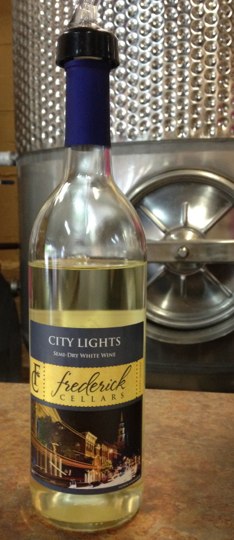
City Lights

  • Varietal: Seyval, Pinot Grigio, Sauvignon Blanc, Traminette
  • Aroma: Crisp, fruity
  • Taste: Tart fruit with a nice finish, slight sweet notes
  • Price: $15
  • My thoughts: Great summer wine pairing salads and grilled chicken. 1% residual sugar but sweetness isn’t overpowering.

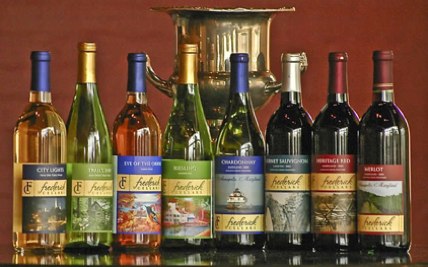
Unfortunately they were out of the Rosé which I bet is pretty tasty as their Cabernet Franc and Cabernet Sauvignon have potential. Their labels are gorgeous, all done by local artists depicting local scenes.

Maryland’s wine industry now has 54 wineries producing 400 wines. There are eight Wine Trails across the state to explore. And there’s a new Maryland Wine Passport you can pick up at any participating winery. Keep track of your visits in your passport and online and get rewards like discounted event tickets, access to special receptions, etc…

Cheers to Maryland’s wine scene and the only in town winery, Frederick Cellars!

Pin It

Tagged As:
,

Ice Wines - Kitchen Rap

I adore dessert wines. I don't know where this love came from but as of late, I can't get my fill. Having gone through ports, muscats, and then lingering for a bit on a personal favorite of mine, Vin Santo Chianti Classico Reserva, I have now discovered ice wines. Though some of you wine connoisseurs may be familiar with these wonderful dessert aperitifs, more and more occasional wine enthusiasts are now discovering these exceptional wines.

Ice wine, or Eiswein, originated in Franconia, Germany in 1794. Grapes were left on the vines until the first deep frost, and the freeze/thaw cycles that occurred concentrated both the sugars and flavors of the grapes. The process was refined and now ice wines are highly prized produced in Germany, Austria and Canada. The Niagara region of Ontario, Canada is currently the most widely respected producer of ice wines in the world.

Franconia, Germany
Ice wine is a type of dessert wine produced from grapes that have been frozen while still on the vine. The sugars and other dissolved solids do not freeze, but the water does, allowing a more concentrated grape must to be pressed from the frozen grapes which results in a smaller amount of more concentrated, very sweet wine. With ice wines, the freezing happens before the fermentation, not afterwards. Unlike the grapes from which other dessert wines, such as Sauternes, Tokaji, or Trockenbeerenauslese, are made, ice wine grapes should not be affected by Botrytis cinerea or noble rot, at least not to any great degree. Only healthy grapes keep in good shape until the opportunity arises for an ice wine harvest, which in extreme cases can occur after the New Year, on a northern hemisphere calendar. This gives ice wine its characteristic refreshing sweetness balanced by high acidity. When the grapes are free of Botrytis, they are said to come in "clean." Due to the labor-intense and risky production process resulting in relatively small amounts of wine, ice wines are generally quite expensive. This chart shows how sugar varies with the temperature:

Temperature ~ Sugar Content

  • -6°C     29%
  • -7°C     33%
  • -8°C     36%
  • -9°C     39%
  • -10°C    43%
  • -11°C    46%
  • -12°C    49%
  • -13°C    52%
  • -14°C    56%
As in all harvests, the exact moment of harvest is extremely important for ice wine. Ideally, the temperature should get to -10°C to -13°C before picking. By waiting till this perfect moment, the grape achieves the optimum level of sugar and flavor. They are then carefully picked by hand. Grapes in this condition have a very low yield; often an entire vine only makes a single bottle and this is typically why ice wine can be so expensive, often sold in half-bottles only.

Ice wine is typically made of Vidal and Riesling grapes. After this long harvest process, the grapes go through weeks of fermentation, followed by a few months of barrel aging. The wine ends up a golden color, or a deep, rich amber and has a very sweet taste. The flavor is a combination of apricot, peach, mango, melon or other sweet fruits with a nutty aroma. It is usually enjoyed as a dessert wine, chilled for one or two hours and served in small cordial glasses.

Ice Wine History

There are indications that frozen grapes were used to make wine as early as Roman times. Pliny the Elder (AD 23 - 79) wrote about certain grape varieties that they were not harvested before frost had occurred. The poet Martial (AD 40 - 102) recommended that grapes should be left on the vine until November or until they were stiff with frost.
Pliny the Elder

Pliny the Elder

Details as to the wine-making and description of these wines are unknown. It can not be completely ruled out that the descriptions refer to dried grape wines, a common style of wine in Roman times, where the raisin-like grapes were harvested late enough for the first frost to have fallen. In either case, the method seems later to have been forgotten.

It is believed that the first post-Roman ice wine was made in Franconia in Germany in 1794. Better documentation exists for an ice wine harvest in Dromersheim close to Bingen in Rheinhessen on February 11, 1830. The grapes were of the 1829 vintage. That winter was harsh and some wine-growers had the idea to leave grapes hanging on the vine for use as animal fodder. When it was noticed that these grapes yielded very sweet must, they were pressed and an ice wine was produced. It should be noted that sweet wines produced from late harvested grapes were well-established as the most valued German wine style by the early 19th century, following the discovery of Spätlese at Schloss Johannisberg in Rheingau in 1775, and the subsequent introduction of the Auslese designation. These wines would usually be produced from grapes affected by noble rot. Thus, Eiswein is a more recent German wine style than the botrytised wines.

Schloss Johannisberg
Throughout the 19th century and until 1960, Eiswein harvests were a rare occurrence in Germany. Only six 19th century vintages with Eiswein harvests have been documented, including 1858, the first Eiswein at Schloss Johannisberg. There seems to have been little effort to systematically produce these wines during this period, and their production was probably the rare result of freak weather conditions. It was the invention of the pneumatic bladder press which made the production of ice wine practical and led to a substantial increase in the frequency and Schloss Johannisberg quantities of production. 1961 saw the production of a number of German ice wines and the wine increased in popularity in the following years. The production has also been assisted by other technological inventions in the form of electrical lighting driven by portable generators (to assist harvest in the cold hours of morning darkness, before the grapes thaw) and plastic films that are used for "packaging" the vines in order to protect the ripe grapes from being eaten by birds while the wine-grower waits for frost.
Karl Kaiser
The pioneer status of the winery Inniskillin in Niagara-on-the-Lake, Ontario led to their first ice wine, produced in 1984 under the direction of the winery's Austrian-born co-owner Karl Kaiser, often being mentioned as Canada's first ice wine. However, ice wine was produced in the Okanagan Valley of British Columbia by German immigrant Walter Hainle in 1972. This ice wine was the result of an early and unexpected frost and yielded 40 litres of wine, which Hainle originally did not intend to sell, although he did so in 1978. In 1983, Karl Kaiser and Inniskillin's German neighbor Ewald Reif, as well as two wineries with Austrian winemakers located in another part of Ontario, Hillebrand and Pelee Island, all left grapes on their vines in order to try to produce ice wine. Inniskillin and Reif lost their entire crop to hungry birds, while Hillebrand and Pelee Island were able to harvest a minuscule amount of frozen grapes. In 1984, Kaiser used nets to protect his vines and was able to produce Inniskillin's first ice wine. This wine was made from Vidal grapes and was in fact labelled "Eiswein".
After the ice wine production was set on commercial footing, Canadian ice wine quickly became popular with domestic consumers and reviewers and many other Canadian producers picked up the idea, since the harsh Canadian winters lend themselves well to the large-scale production. The international breakthrough of Canadian ice wine came in 1991, when Inniskillin's 1989 Vidal ice wine won the Grand Prix d’Honneur at Vinexpo. The Canadian trend towards increased cultivation of Vitis vinifera (European) grape varieties in the 1990s expanded the palette of varieties available to be bitten by frost. By the early 2000s, Canada was established as the largest producer of ice wine in the world.

In Germany in the early 2000s, good ice wine vintages have been more rare than throughout the 1980s and 1990s. Many wine-growers cite climate change as a cause and this received support from a study by the Geisenheim Institute.

Riesling
Ice Wine Grapes
Typical grapes used for ice wine production are Riesling, considered to be the most noble variety by German winemakers; Vidal, highly popular in British Columbia and Ontario, Canada; and, interestingly, the red grape Cabernet Franc. Many vintners, especially from the New World, are experimenting with making ice wine from other varieties: whites such as Seyval Blanc, Chardonnay, Kerner, Gewürztraminer, Chenin Blanc, Pinot Blanc, and Ehrenfelser; or reds such as Merlot, Pinot Noir, and even Cabernet Sauvignon. Pillitteri Estates Winery from the Niagara-on-the-Lake region of Ontario claim to be the first winery in the world producing Shiraz (Syrah) ice wine with the 2004 vintage. Ice wines from white varieties tend to be pale
Vidal
yellow or light gold in color when they are young and can maderise (acquiring a deep amber-golden color) as they age. The red varieties tend to have a light burgundy or even pink color like that of rosé wines.Some vintners in Canada have taken a step forward in experimenting with sparkling ice wine. Sparkling ice wines have texture similar to other sparkling wines, such as champagne or Asti, but with fuller body, and a significantly higher sugar level balanced with high acidity.

Ice Wine Production
Natural ice wines require a hard freeze (by law in Canada 17 °F or colder, and in Germany 19 °F or colder), to occur sometime after the grapes are ripe, which means that the grapes may hang on the vine for several months following the normal harvest. If a freeze does not come quickly enough, the grapes may rot and the crop will be lost. If the freeze is too severe, no juice can be extracted. Vineland Winery in Ontario once broke their pneumatic press in the 1990s while pressing the frozen grapes because they were too hard. The longer the harvest is delayed, the more fruit will be lost to wild animals and dropped fruit. Since the fruit must be pressed while it is still frozen, pickers often must work at night or very early in the morning, harvesting thegrapes within a few hours, while cellar workers must work in unheated spaces.

In Austria, Germany, and Canada, the grapes must freeze naturally to be called ice wine. In other countries, some winemakers use cryoextraction (that is, mechanical freezing) to simulate the effect of a frost and typically do not leave the grapes to hang for extended periods as is done with natural ice wines. These non-traditional ice wines are sometimes referred to as "icebox wines". An example is Bonny Doon's Vin de Glacière. The high sugar level in the must leads to a slower-than-normal fermentation. It may take months to complete the fermentation (compared to days or weeks for regular wines) and special strains of yeasts should be used.

My Selections
Egon Muller, Riesling, Eiswein, Mosel-Saar-Ruwer, Scharzhofberger, 1996:  Deep golden colored, this full bodied Eiswine has a nearly ideal combination between hyper-sweetness and refreshing acidity, along with lemon-lime, citrus peel and minerals. A long spicy finish that cannot help but enchant. One meant for early drinking or medium term cellaring, the wine should cellar comfortably until 2020.  

Krebs-Grode, Eiswein, Auxerrois, Eiswein Rheinhessen, 1998:  Medium bodied, with abundant spices on a deliciously sweet background of pineapples, lime and apricots and with generous hints of sweet cream and minerals, this superbly balanced and remarkably elegant wine has flavors that linger seemingly without end. Best drinking now - 2012.


Inniskillin, Ice Wine, 2001:  Traditional ice wine, easily comparable to the best of Germany, this deeply sweet, but remarkably well balanced and elegant wine almost attacks you with luxurious flavors of peaches, lychees, pears in the way of fruits and then honey, cinnamon and candied fruits on the long finish. Full bodied, with just the right amount of natural acidity, the wine is drinking nicely even now.

Inniskillin, Ice Wine, Vidal, 1999:  This full bodied, bronzed orange wine is showing smooth and rich with honey and apple sweetness, together with aromas and flavors of dried apricots, yellow peaches and mangoes, Which overlay comfortably by light cinnamon-ginger flavors. Long and mouth-filling, the wine is drinking beautifully now and promises to cellar well until 2010 - 2012.

Columbia Crest, Semillon Ice Wine, Reserve, 1998: Full bodied, with intense honeyed sweetness and with delicious fig and summer fruits matched nicely by mocha and spiced roasted nut flavors and aromas. Excellent balance between fruits, sweetness and acidity and a very long finish add enormously to the charm of the wine. Drink 2002 - 2012 or longer.

Tasting

Even though it is normal for residual sugar content in ice wine to run from 180 g/L up to as high as 320 g/L, ice wine is very refreshing (as opposed to cloying) due to high acidity. Ice wine usually has a medium to full body, with a long lingering finish. The nose is usually reminiscent of peach, pear, dried apricot, honey, citrus, figs, caramel, green apple, etc., depending on the varietal. The aroma of tropical and exotic fruits such as pineapple, mango, or lychee is quite common, especially on white varietals.

Ice wine usually has a slightly lower alcohol content than regular table wine with some  Riesling ice wines from Germany having an alcohol content as low as 6%. Ice wines produced in Canada usually have higher alcohol content, between eight and 13 percent. In most years, ice wines from Canada generally have higher brix degree (must weight) compared to those from Germany. This is largely due to the more consistent winters in Canada. Must with insufficient brix level cannot be made into ice wine, and is thus often sold as "special select late harvest" or "select late harvest" at a fraction of the price that true ice wine commands.

Connoisseurs argue about whether ice wine improves with age or is meant to be drunk young. Those who support aging claim that ice wine's very high sugar level (which is often much higher than that of Sauternes) and high acidity preserve the content for many years after bottling. Those who disagree contend that as ice wine ages, it loses its distinctive acidity, fruitiness, aroma, and freshness.

Since I'm just a simple lover of ice wines, I'll concentrate on the drinking and leave the arguing to the so called 'experts.' What I am hopeful of is that once you try a quality ice wine, especially if it's after reading this article,  you raise a toast to me.

Bon Appetit!

Lou

edenwine.co.uk, longviewwinery.com, trentobike.org, spicetrader.net, Wolfgang Shultz, inniskillin, gvstudios.com, wineandpassionaccessories.com, lancette-arts.journal.ca, cookinglight.com, wikipedia.org
Benefactors! Grape vines for wine for Mass and the Roman Breviary ...

2012/04/26 · 15:09

What confusion! O.K. So, yes, the grape vines finally arrived! Perhaps it was just addressed to “George David” instead of “George David Byers”. Yikes! The idea is to plant these with the end of making wine for Holy Mass. Very, very, very cool!

And… and… as an extension of the Holy Sacrifice of the Mass, there’s the Roman Breviary, which also arrived today… in three wonderful volumes. Thanks, N.S.! Very kind! I know that that’s a sacrifice for you. Very much appreciated!

Special Winery Profile: Sheldon Wines, Santa Rosa California ...

The Latest Reviews of Sheldon Wines

by Kerry Winslow, grapelive.com

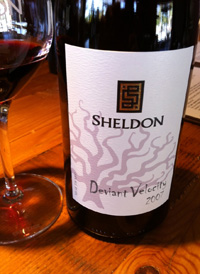
2007 Sheldon Wines, Deviant Velocity, California.
This remarkably elegant and vibrant red is unbelievably 100% Petite Sirah from near Lodi, but such is the deft winemaking that you’d almost never guess the grape or region, even though it is worth mentioning that the vineyard site is completely unique as it is limestone soil and sits below sea level. All of these factors shine through of this medium weight Rhone like wine that shows bright blueberry, tangy boysenberry and juicy plum fruits with pepper and sweet spices along with hints of briar, mineral and bitter chocolate. This wine dances on the palate and lingers well on the finish with just a hint of tannin. This under 14% wine is well balanced and has all come together nicely and should drink gracefully for many years to come, this is a truly special example of Petite Sirah.
($28 Est) 93 Points, grapelive

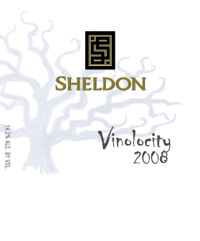
2008 Sheldon Wines, Vinolocity, Proprietary Red.
The Sheldon’s are Grenache fiends and adore the grape, so it is the flagship wine in their line up, the Vinolocity and their passion and love for this grape shows deeply in this artisan wine crafted from vines at the Voglzang Vineyard in Santa Ynez. Dylan and Tobe started their winery wanting to make wines that showed the essence of their much loved Gigondas and Chateauneuf-du-Pape, they even spent part of their honeymoon working with Louis Barruol at Chateau St. Cosme, which is the oldest estate in Gigondas with some of the most interesting terroir and vines in the region, not only that St. Cosme makes some of the greatest Grenache wines in the world, and from that experience Sheldon Wines was born and has led to their Vinolocity wines based on Grenache. The 2008 Sheldon Vinolocity is vibrant and sweetly elegant showing framboise and kirsch along with strawberry and pomegranate fruit while pepper and fennel add contrast and spice. Silky smooth and lengthy this Grenache is framed by subtle wood and nice acidity with lingering plum and lavender.
92+ Points, grapelive

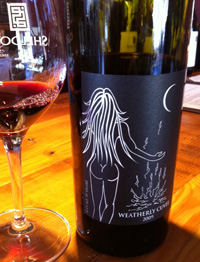
2009 Sheldon Wines, Weatherly Cuvee, Old Vine Field Blend, California.
This vintage of “Weatherly Cuvee” is 50% Dry Creek Cabernet Sauvignon and 50%  Calistoga Petite Sirah from vines that average 70 years old and was fermented on Viognier skins and aged in neutral French oak barrels. It is really hard not to love this wine just for the label and elegant wax capsule, but the wine inside is stunning and full of fruit, life and charm with violets, blueberry, sage, tobacco leaf, blackberry, plum and cassis all bursting from the glass. This perfumed and medium weight red shows fresh red, black and blue fruits and has excellent balance and length with touches of earth, spice and mineral. This is a great drinking wine now, though I should think a bit of cellar time with have rewards as well, the Sheldon’s are really making some fantastic wines and this one is especially pleasing and graceful.
($42 Est.) 93-94 Points, grapelive

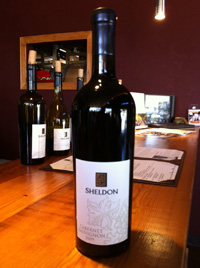
2009 Sheldon Wines, Cabernet Sauvignon, Sonoma County.
I have watched this wine from barrel to bottle with great interest and it just continues to gain in class and depth with intriguing flavors and old school or old world character. While in barrel it was heady with perfume and Loire Franc like spiciness and acidity, but while keeping those qualities it has gained real Cabernet Sauvignon grip and force, pushing it along and reminds of the 1970′s Joseph Phelps Cabs, wines that showed California fruit but had Bordeaux like grace and refined tannins. Not a modern port like rich Cab, but a wine to enjoy with a meal that while deep and darkly flavored it never feels overly heavy or over-oaked. From an old vine plot of Cab in Dry Creek Valley the 2009 Sheldon Wines, Cabernet Sauvignon Sonoma County is a graceful wine with acacia flowers, cigar box, cedar and pepper leading to blackberry, tangy plum, currant and kirsch while melted licorice, vanilla, smoke and sage linger in the background. This wine is a throw back to the lower alcohol style cabs with fresh vibrant flavors that can be found in the Ridge wines as well, I can’t wait to have some more of this one.
($32 Est.) 93 Points, grapelive

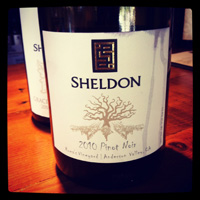
2010 Sheldon Wines, Pinot Noir “Roma’s Vineyard” Anderson Valley.
I have twice now reviewed this wine, but it deserves the attention, and it keeps getting better and changing all the time, easily making it one of my favorite wines of the vintage. The 2010 Sheldon Wines, Pinot Noir “Roma’s Vineyard” Anderson Valley is something of a miracle, as it had to survive a very difficult vintage and a huge storm that threatened to ruin harvest, but it lives and is glorious in everyday from it’s floral perfume to the long sexy finish. The nose is seductive with a dance of violets, roses and dried currants with hints of vanilla and subtle wood, plus a touch of truffle and spice. The palate is alive with tangy cherry, framboise, fennel and plum with a streak of mineral rockiness and touch of pepper along with tea notes. This fresh and silky Pinot is a match for any Premier Cru Beaune wines with it’s Burgundy like class and texture. This wine cannot be recommended more highly, I urge you to jump on it while it is still available from the winery, don’t wait as sadly it is a tiny production artisan wine that will disappear quickly.
($45 Est.) 95 Points, grapelive

Visit the Sheldon Wines Tasting Room in Santa Rosa, known as “The Sippy Lounge” and check them out online at www.sheldonwines.com

. Bookmark the

.

The 2012 grape harvest to be the first when wine may be labelled ...

This year’s harvest of organically grown grapes may be the first to end up in a bottle labelled ‘organic wine’.  Up until now the only EU-wide rule was that wine made from organically grown grapes, for which there are rules for organic production, could be labelled “wine from organic grapes”. Wine is the last sector not fully covered by EU rules on organic farming under Regulation (EU) 834/2007.

In 2010 there were 75,000 hectares of land under organic grape production out of a total 3.5m hectares under wine production, so just a little over 2% was organic mainly in Italy, France and Spain.

English Vineyard

An English vineyard

On 1 August 2012 Regulation (EU) 203/2012 will take effect.  The Regulation sets out detailed rules for the production of organic wine and includes:

  1. The list of products and substances which can be used in the production of organic wine and specifies those which must be derived from organic raw material where available.
  2. The oenological practices, processes and treatments that are prohibited.
  3. The oenological practices, processes and treatments permitted under specified conditions.
  4. The oenological practices, processes and treatments permitted but subject to further review by 2015 with a view to phasing them out or further restrictions.

In particular, the maximum sulphur dioxide content must not exceed 100 mg/l for red wine and 150 mg/l for white, in both cases with a residual sugar level less than 2 g/l, and for all other wines there must be a reduction of 30 mg/l in the levels prescribed for non-organic wine production in Regulation (EU) 606/2009.

The oenological practices prohibited include:

  • Partial concentration through cooling.
  • Elimination of sulphur dioxide by physical processes.
  • Electrodialysis treatment to ensure tartaric stabilisation.
  • Partial dealcoholisation.
  • Treatment with cation exchangers to ensure tartaric stabilisation.

The practices permitted under specified conditions include heat treatment where the temperature must not exceed 70 oC, centrifuging and filtration with or without an inert filtering agent where the size of the pores must not be smaller than 0.2 micrometer.

The use of heat treatments, ion exchange resins and reverse osmosis are all practices subject to review by 2015, as is the use of copper sulphate.

In addition Regulation (EU) 271/2010 requires that from 1 July 2012 all organic products in the EU must bear the organic logo of the EU and the code number of their certifier in order to be marketed as organic.

Organic logo of the EU

There are transitional measures which allow stocks of wine produced up to 31 July 2012 in accordance with existing legislation to be brought onto the market until stocks are exhausted on condition that they are correctly labelled. Wine produced in accordance with the new rules may be labelled ‘organic wine’ and must display the new ‘Organic logo of the EU’ and wine may continue to be brought on to the market labelled ‘wine made from organic grapes’ but cannot bear the new organic logo.

Kunde Family Estates – Another Sonoma Jewel - Grape ...

Posted on April 26, 2012

We ambled into the tasting room at Kunde Family Estates in Kenwood, California after about forty guests exited for their winery tour.  This was good planning on our part except that we didn’t actually plan it – for once, we just arrived at a winery with a que sera sera attitude!

After a short wait, Sandrew Montgomery, Tasting Room Representative, invited my two daughters and me into the lovely Wildwood Room for a private tasting of Reserve tier wines, proprietary blends, and wines based on our preferences.  Yes, please!  Sandrew (who also had a fleeting part in the movie, Bottle Shock of which many scenes were actually shot at Kunde, and whose father graduated from the same university as me) was friendly, talkative, well informed, and made us feel welcome just as I knew he has been for other visitors who appreciate good wine.  He stressed three very important facts about Kunde Estates (and please check out their website for details)…

**Kunde is family owned and operated for five generations.

This 1850 acre estate in Sonoma Valley was founded by Louis Kunde who emigrated from Germany and purchased the original Wildwood Vineyards in 1904.  The family is committed to moving forward with innovative techniques, state of the art facilities, and making fantastic wine.

**Certified sustainable farming practices are inherent in their viticultural practices.

Kunde Family Estates is “Certified Sustainable” by the Certified Sustainable Winegrowing Alliance for grape growing and winemaking enterprises which include energy efficiency, water conservation, waste management, and viticultural techniques.

**All wines offered are from Estate grown grapes. 

Each bottle of wine from Kunde contains grapes grown on the Estate – 100% exactly.  Let’s just say that they have taken incredibly  good care of the grapes from their beginning and know where those grapes have been…Just like a good family should!

The Wildwood Room where we had our tasting features an expansive window which allows for viewing of the entrance to the beautiful Syrah hillside, wine aging caves, and dedicated/busy workers engaging in that day’s winemaking punch list.  It also let us view Zach Long, Director of Winemaking Operations, making sure all was right in the wine world at that moment.  And when I mentioned ”Wouldn’t it be great to talk to Zach about wine?”, Sandrew was nice enough to hail Zach and ask him to share a bit of his time with us.  Thanks, Sandrew!  Zach sat down with Jessica, Stephanie, and me and answered the question “What is your favorite wine?” with the response “That’s like asking a mother to choose her favorite child!”  And what we all know Zach meant  and what he explained was that each wine expresses its own differences based on a variety of factors and is appreciated for what they are now and what they will become with age (Zach will be an awesome dad, by the way, already knowing that!).  He also shared his serious breadth of experience in the biz and innovative winemaking techniques at Kunde.  Further, Zach took time to show us into the bottling area as well as the caves where barrels were housed for fermenting…and where dinner parties, receptions, and other events are held.  Seriously Nice/Smart Guy!

So what wines did we love at our tasting?  Brief tasting notes offered, but I was too busy sipping and chatting to write more!!

**2011 Magnolia Lane Sauvignon Blanc – This wine is a delicious Sauvignon Blanc with some minerality to it combined with white peach, grapefruit, mango, and some melon.  $17.00

**2010 Chardonnay, Sonoma Valley Family Estate Series -  Notes of pear, green apple, vanilla, and some cloves make this Estate grown Chardonnay a favorite.  $18.00

**2007 Sonoma Valley Family Estate Series Syrah – I ordered two bottles of this one…I love raspberries on the nose and palate, kudos from Wine Enthusiast (91 points), and a price of $10.00!  FYI-Kunde is running a special on a case of this good stuff right now so check out the website~

**2009 Reserve Cabernet Sauvignon – Wow! With aromas of blackberries and black pepper and with flavors of raspberries and some toast French oak, this wine is one of Kunde’s best.  $45.00

**2008 Reserve Century Vines Zinfandel – From vines planted in 1882, this amazing Zinfandel (yes, I have a bottle) has aromas of boysenberry and black pepper with that smooth, spicy red mouthfeel that I crave from a really good Zin.  Wine and Spirits gave it 91 points and their designation of ”Year’s Best Zinfandel” and “Best Buy”. $35.00

I feel quite honored to have spent time in such a lovely winery and have the opportunity to talk to Sandrew and Zach.  Thanks, guys…the Kunde family is fortunate to have you on their team.  And the wine we loved (and purchased) exhibits that approachability and comfortable feeling that we received – with some delicious surprises as well!

Next time I’m at Kunde Family Estates?  ~ Lunch and wine tasting at the Mountain Top!

Sandrew, Jessica, Stephanie, Cindy, Zach in the Wildwood Room - Great afternoon at Kunde Family Estates!

Cheers~  Cindy

Tags: , , , ,


Leave a Comment

Wine Quiz: Which Grape Originally Defined the Mokelumne River ...

The Mokelumne River AVA was approved in 1992, along with the other six AVAs nested within the larger Lodi AVA. However, the Mokelumne River growing region’s boundaries were first drawn out  on a napkin by Julio Gallo decades prior. He and others believed that area best in the state for growing a particular grape.

Which grape defined what is now the Mokelumne River AVA?

  1. Petite Sirah 
  2. Flame Tokay
  3. Zinfandel
  4. Rubired

Flame Tokay, a seeded, vitis vinifera table grape, grows better in the Mokelumne River AVA than anywhere else in the state. The grape may be delicious when grown elsewhere. However, its skin only in the area now known as the Mokelumne River AVA does it develop the distinctive bright pink “flame” color for which it is named.

The Mokelumne River AVA surrounds the town of Lodi. It’s climate is reasonably similar to that of its neighboring AVAs: Mediterranean with warm to hot days cooled dramatically be evening breezes from the Delta. However, the soil of Mokelumne River is very distinctive and has even taken its name from the Flame Tokay grape. The deep, extremely sandy and well-drained is called Tokay Sandy Loam.

That soil has proved to be good for more than just Flame Tokay though. Zinfandel does especially well in the Tokay Sandy Loam. Sand, which does not hold water, is also very resistant to Phylloxera. As a result, the Mokelumne River AVA is home to vast quantities of very old vines, including Zinfandel, Carignane, Cinsault and even some original plantings of Mission.

gary-and-tokay
Greg Burns, proprietor-winemaker at Jessie's Grove stands next to one of his massive, ancient Flame Tokay vines in April, 2012.

Much of Lodi’s Flame Tokay was pulled up after seedless table grapes, such as Thompson, became hugely popular in the 1970’s. However, fields of the Flame Tokay can still be found here and there, some long-abandoned and growing wild.

The most lovingly tended old-vine Flame Tokay is probably that in the historic Royal Tee vineyard at Jessie’s Grove Winery. The grapes are now used to produce a lovely fortified wine. Gentle and light-bodied for a fortified wine, the 2009 Jessie’s Grove Ancient Vine Tokay smells and tastes of toasted marshmallow.

tokay-bottle

Follow NorCalWine on Twitter for breaking wine news, information on events and more. Become a fan and join the NorCal Wine community on Facebook

This article is original to NorCalWine.com. Photos by Fred Swan. Copyright 2012 NorCal Wine. All rights reserved.