Thursday, March 29, 2012

Wine of the Day | grapelive.com

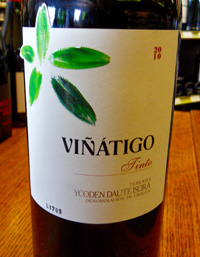
2010 Vinatigo Tinto Tenerife, Ycoden Daute Isora, Canary Islands, Spain.
The Vinatigo is made from 100% Listan Negro a black grape found on the Canary Islands and it makes a spicy dry red wine that is dusty and chock full of mineral notes and is medium weighted. The 2010 vintage is smashingly good with Pinot Noir like silkiness and bright red fruits and red pepper spices plus sweet floral perfume. This wine is exotic and old world charming with a light elegance and beautiful layers of flavors that include cherry, violets, raspberry and wild strawberries along with fine dry tannins, baked earth and Asian spices. This is the best vintage by far in my limited experience with this producer, though I have enjoyed them in the past, and I highly recommend searching it out for a totally unique and wildly fun wine.
($20 Est.) 92+ Points, grapelive

. Bookmark the

.

Rootstock vs Own-rooted, Taste Washington, Auction of Washington ...

Can Washington Growers Use Rootstocks and Maintain Fruit and Wine Quality?

Almost all wine grapes grown in Washington are grown on their own roots. That’s unusual. In most of the world’s other major wine regions, grapes are grown on grafted rootstock. That is, varietal scions (the part of the plant that produces the leaves, buds, and fruit) are grafted onto rootstocks resistant to phylloxera–a tiny sap-sucking insect–and nematodes–microscopic worms that may attack the roots of vines. For a variety of reasons–mostly unknown–Washington vineyards have not yet been plagued with phylloxera and nematodes. The operative word being yet.

The spectre of a vine-destroying invasion has been lurking in the shadows of Washington vineyards for years. What if, wine industry professionals have fretted, growers did have to start using rootstocks in order to beat the insects and worms? Would grafting affect wine quality? Are Washington wines great in part because their grapes grow on own-rooted vines?

No Differences Detected

An international group of researchers examines the research vineyard at WSU's Irrigated Agriculture research and Extension Center in Prosser. Photo: Washington State University; high resolution versions available upon request.

An international group of researchers examines the research vineyard at WSU's Irrigated Agriculture research and Extension Center in Prosser. Photo: Washington State University; high resolution versions available upon request.

Answers to those questions have been years in the coming and required a monumental, multi-year effort on the part of Washington State University researchers. A team of scientists led by WSU viticulturist Markus Keller just completed a set of projects that their predecessors began in 1999, with results published in a pair of papers in the March issue of the American Journal of Enology and Viticulture.

“The short answer,” said Keller, the Chateau Ste. Michelle Professor of Viticulture based at WSU’s Irrigated Agriculture Research and Extension Center in Prosser, “is don’t be afraid.”

Enologist Jim Harbertson, an associate professor also based at the Prosser station and a cooperator in the study, agreed. “The big push back against grafted rootstocks in Washington has been the fear that wine quality won’t be as good. But what we saw is that, for all practical purposes, there is no difference.”

Climate, Not Rootstock, an Influence

Keller pointed out that since Washington growers use deficit irrigation–controlled amounts of water–to manage vine vigor, there were also no differences in canopy size. “Water deficit overrides any vigor-promoting influence a rootstock might exert in wetter climates.” In other words, growers will be able to continue using the vineyard management techniques they’ve already mastered, even if they grow grafted vines.

“It’s the climate, not the rootstock,” Keller said, referring to Washington’s excellent reputation for producing high-quality fruit. “The differences we did see over the course of this experiment had to do with vintage.” Both scientists said that their multi-year experiment confirms that scion, vineyard location, and vintage are the driving factors of grape and wine quality, and pointed out that this is something growers and winemakers already know. “We just need to be reminded once in a while.”

Technicians at the WSU research winery in Prosser bottling wine made from grapes grown on scion's grown on rootstocks commonly used in commercial-scale vineyards. Photo: Washington State University; higher resolution versions available upon request.

Technicians at the WSU research winery in Prosser bottling wine made from grapes grown on scion's grown on rootstocks commonly used in commercial-scale vineyards. Photo: Washington State University; higher resolution versions available upon request.

Three Varieties tested over Three Seasons

The advice to “have no fear” of grafting comes from data collected over three growing seasons, with three wine-grape varieties–Merlot, Syrah, and Chardonnay-–evaluated on six common, commercial rootstocks as well as on their own roots. One rootstock failed the trial because it over-wintered poorly and was deemed unsuitable for use in Washington’s growing environment. Once the research vines were established, wine was made from each grape/rootstock combination for three growing seasons, and then tested for multiple indicators of quality, including those critical to red wine quality.

Results of this complex, long-term experiment are published in a pair of papers, one focused on plant vigor, yield formation, and fruit ripening, the other on grape and wine composition. The viticultural results show that variations are due to “scion cultivar, spatial differences across the vineyard site, and climate variation among years.” In other words, the dominating factors affecting grape growth are vintage and vineyard site and soil variability – not rootstock. Likewise, the enological results “showed that rootstock caused few significant differences in fruit and wine composition and, instead, the dominant variables were scion and, to a lesser extent, vintage.”

Own-rooted Vines Recover Better

Fortunately, right now, there is no reason for eastern Washington growers to switch to grafted rootstocks. Indeed, for economic reasons, it is better to stay with own-rooted plants wherever possible. “When we have a freak cold snap, and eastern Washington sees these periodically, vines can die to the ground. Grafted vines would need to be regrafted because the graft point sits above the ground, while own-rooted vines will likely recover on their own.” Regrafting is expensive and, indeed, grafted vines create higher initial startup costs, because they are more expensive for nurseries to produce.

But, Keller cautioned, eventually there will likely be cause for Washington growers to move toward grafted vines. “Nematodes build up in the soil over time,” he said, “so increasing numbers of second or third generation vineyard plantings will likely need to be on grafted vines.”

As for why Washington has, for the most part, not been scourged by phylloxera, the sap-sucking insect that plagues nearly every other growing region, he said no one knows. “Some think it is our cold winters – but …Germany, Switzerland and Canada have problems with phylloxera. It may be that our dry soils make it hard for the insect to spread.” But for that Australia offers a cautionary tale, he said, as trucks and mechanical harvesters are likely the cause of the spread in the dry soils there. “A few insect eggs could have been caught in tractor tires and spread from one location to another.”

Both scientists said that a large team has worked for years on the own-rooted versus grafted experiments. Bob Wample, a longtime leader in viticulture both at WSU and then at Fresno State University in California, initially planted the vineyard blocks. Sarah Spayd, now at North Carolina State University, was also one of the originators of the experiment. Keller’s former Australian graduate student, Shayne Hackett, grafted scions to rootstocks in 2002. Many other members of WSU’s technical staff, as well as graduate students mentored by Keller and Harbertson, have been diligent data collectors for many years and contributed essential expertise to the projects. The WSU Agricultural Research Center, the Northwest Center for Small Fruits Research and the Washington Wine Advisory Committee helped fund it, while donations of plant material came from Ste. Michelle Wine Estates and Inland Desert Nursery, and Quiedan Company donated trellis materials.

“This type of experiment has never been done before on this scale and with this many variables,” Harbertson said. “It was huge and complex. The methods and results truly reflect Washington’s unique conditions.”

“We now know that if we ever have a problem with phylloxera or nematodes, we have the rootstocks to choose from that work in the growing conditions here,” added Keller. “They and many more are now also in our clean plant program, so we’re ready if growers wish to start using rootstocks.”

By continuing to use science-based solutions, techniques and management strategies, we know that Washington’s reputation for producing premium wines is safe and can continue to grow.

–Brian Clark

For more information on WSU’s viticulture and enology partnerships with the Washington wine industry, please visit http://bit.ly/wsuveext.

The papers discussed in this story are available at the Journal of Enology and Viticulture website. For the abstract of “Rootstock Effects on Deficit-Irrigated Wine Grapes in a Dry Climate: Vigor, Yield Formation, and Fruit Ripening” by Keller, Harbertson and Mills, please visit http://bit.ly/GUJUeU. For the abstract of “Rootstock Effects on Deficit-Irrigated Wine Grapes in a Dry Climate: Grape and Wine Composition” by Harbertson and Keller, please visit http://bit.ly/GUKfyg.

Taste Washington and Auction of Washington Wines

Auction of Washington Wines Celebrates 25th Anniversary, Partners with WSU

Auction of Washington Wines joins forces with Washington Wines Festival and Washington State University’s Celebrate Washington event to create a collaborative fundraiser in celebration of the Auction’s 25th anniversary. The auction continues to benefit Seattle Children’s Hospital, as well as the Washington Wine Education Foundation.

“No world-renowned wine region is without a prominent university partnering in its success. The Northwest is no exception,” said Ted Baseler, chair of WSU’s Campaign for Wine and president of the Auction of Washington Wines board of directors. Washington State University has provided critical help with science-based solutions to grape-growing and winemaking challenges. “In the 10 years of the Celebrate Washington Wines event, we have provided over $1 million to the Viticulture and Enology program, transforming it into one of the largest in the United States,” said Nancy Harnasch, past chair of the event. WSU will be represented on the Auction of Washington Wines Chairman’s Committee for the 25th Anniversary celebration.

The Auction of Washington Wines is comprised of five events including Revelry at Col Solare in the Tri-Cities area (Spring 2012), Picnic & Barrel Auction at Chateau Ste. Michelle Winery (August 16), the Winemaker Dinner Series at various locations throughout the Puget Sound region (August 17), Covey Run and The Wine Gala at Chateau Ste. Michelle Winery (August 18).

Since its inception in 1988, the Auction of Washington Wines has raised more than $26 million for uncompensated care at Seattle Children’s Hospital, whose core mission is to provide exceptional care for every child in the region, regardless of a family’s ability to pay. A portion of the money raised also benefits the Washington Wine Education Foundation which aims to strengthen the quality and reputation of the Washington wine industry by providing support for WSU’s world-class viticulture and enology research and Extension, education, and training programs that meet the specific needs of the Washington wine industry.

"I hope you'll join me at Taste Washington. We'll be in the Vineyards section. I would love to chat with you about our science-based educational opportunities in viticulture and enology, and what it takes to keep Washington wines among the world's best." – Thomas Henick-Kling, director, WSU Program in Viticulture and Enology

"I hope you'll join me at Taste Washington. We'll be in the Vineyards section. I would love to chat with you about our science-based educational opportunities in viticulture and enology, and what it takes to keep Washington wines among the world's best." – Thomas Henick-Kling, director, WSU Program in Viticulture and Enology

Funding directed to the Washington Wine Education Foundation goes toward research in viticulture and enology, Washington-based educational programs that promote undergraduate and graduate degrees, and to farm worker and industry employee programs that promote health and safety. This educational group began collaborating in 2001 to create quality educational programs in grape growing and winemaking.

The 25th Auction of Washington Wines is chaired by the industry’s finest. Bob Betz of Betz Family Winery, and Stein Kruse, president and CEO of Holland America Line and chairman of Seabourn, are the 2012 Auction co-chairs. Rick Holley, president and CEO of Plum Creek Timber Company, will lead the efforts of rallying past chairs.

For more information about Auction of Washington Wines, please visit http://bit.ly/auctionwashwines.

WSU V&E is at Taste Washington This Weekend

Taste Washington weekend features fun and educational wine seminars on both Saturday, March 31, and Sunday, April 1, at CenturyLink Field Event Center. These seminars are led by top national wine personalities and sommeliers. Topics for the seminars showcase various aspects of Washington wine, as well as wine and food pairing demonstrations by renowned local chefs.

For more information on Taste Washington, please visit http://bit.ly/tastewashington.

WSU Mediterranean Cruise Helps Support Viticulture and Enology Education

Wine. Wind. You.

Cruise the Mediterranean and sip premium wines in luxury.

Cruise the Mediterranean and sip premium wines in luxury.

This May, a small, select party will set sail aboard the luxurious Windstar Wind Surf to cruise the Mediterranean. Will you be on board?

Join Washington wine and food celebrities as they sail the Mediterranean on a private chartered cruise, May 28 – June 2, 2012. Embark from Nice, France, and call at Portofino, Cinque Terre, Livorno, Portoferraio, and Rome.

Chateau Ste. Michelle culinary director John Sarich and head winemaker Bob Bertheau, Jeff and Vicky Gordon of Gordon Estate, along with world-renowned wine expert Thomas Henick-Kling will wine, dine and educate you in elegant style.

Enjoy being pampered on a small ship in the fleet of one of the world’s best cruise lines. You’ll enjoy:

  • All meals and snacks aboard ship, including special gourmet wine tasting dinners prepared by our celebrity chef.
  • Featured wines poured throughout the cruise along with tasting events and winemaker seminars.
  • Parties aboard ship and live entertainment every night.
  • Excursions to the most beautiful and historic ports of call on Italy’s beautiful Mediterranean coast.
  • Only 146 freshly redesigned cabins are available for this exclusive wine lover’s expedition.

Learn more at http://bit.ly/cruisewine.

Tags: , , ,

Leave a Comment

Northern Vintners Work To Improve Wines' Quality « CBS Minnesota

(credit: Jean-Pierre Muller/AFP/Getty Images)

(credit: Jean-Pierre Muller/AFP/Getty Images)

GARRETSON, S.D. (AP) — South Dakota winemaker Dave Greenlee exudes pride as he pours a sample of a 2011 Marquette nearly ready for bottling. Wine connoisseurs who favor vintages from Bordeaux or Napa Valley might not have heard of the grape, but Marquette has been exciting Northern winemakers since a Vermont vintage won best-in-show red at a 2009 cold-climate wine competition.

While wineries have been popping up throughout the Upper Midwest, their vintages have tended to be sweet and often suffer from harshness. Marquette offers vintners a chance to make a good, dry red. Anne Fennell, a viticulturist at South Dakota State University, said one breeder recently described it as “our first real wine grape.”

Greenlee and his wife, Sue, fermented their first batch two years ago, and they’ve been trading tips since then with peers in other cold states as they work to improve the quality of their wine. Now, they’ll get help from a $2.5 million U.S. Department of Agriculture grant that has university researchers from a dozen states gathering information about cold-hardy grapes and teaching viticulturists and winemakers how to improve their products and market them to a wider audience.

Led by Cornell University, the Northern Grapes Project will work with more than 330 wineries and 1,300 growers managing more than 3,000 acres of grapes from the Upper Midwest to New England.

“Marquette is so new that we are all trying to figure out what brings out the best flavors from this grape,” Greenlee said.

A grandson of pinot noir released in 2006, Marquette is the newest of four grape varieties developed by the University of Minnesota to resist temperatures that can dip into the negative-30s. Winemakers had had high hopes for Frontenac, one of the university’s earlier releases, but the grape’s high acidity proved challenging, and many winemakers have moved to using it in ports.

The prospects for Marquette, a high-sugar, moderately acidic grape with hints of cherry, berry and black pepper, have looked bright since Lincoln Peak Vineyard and Winery in New Haven, Vt., won a best-in-show award about three years ago.

Lincoln Peak owner Chris Granstrom called the grape a “real breakthrough” because it gives Northern winemakers the opportunity to make a dry red on par with those from more traditional growing areas.

“Certainly we still have our job to do in terms of perfecting our growing and our winemaking techniques,” Granstrom said. “It’s brand new, and I don’t really think we’ve even discovered the full potential of it yet.”

Fennell, who is leading the Northern Grapes Project’s fruit composition and genetics component, said there’s still much to learn about Marquette because it was released only five years ago and it takes three years to get a first crop. Researchers are still figuring out how the grapes ripen, the best time to harvest and how many buds should be left when pruning. Those at South Dakota State and the University of Minnesota are responsible for identifying and characterizing the novel flavor and aroma compounds, information that can help winemakers tweak their processes.

“All of that is known for these old European varietals that are out there,” Fennell said.

Tim Martinson, the Cornell scientist leading the project, said cold climate winemakers and grape growers share information and tips at conferences and over the phone, but the project will pull it together in writing and make it available through papers and webinars. The goal, he said, “is to raise the industry.”

Patty Held, an International Cold Climate Wine Competition judge, said she noticed a big improvement in the reds from 2010 to last year. The winemakers improved the complexity, flavors and aromas of the cold-climate varietals and are getting better at learning what they can do with their grapes, she said.

“Regional wineries are just really doing a great job in drawing attention to what they can do well,” said Held, a Hermann, Mo.-based winery consultant, “and that’s what their market or niche needs to be, realizing that no, they’re not Sonoma or Napa, but that they’re Minnesota or Iowa or Wisconsin.”

At Tucker’s Walk Vineyard, Greenlee plans to fill about 1,000 or so bottles of 2011 Marquette. If all of them are uncorked in the upper Midwest, that’s fine, he said.

“What we have is going to be unique to here,” Greenlee said. “And there’s no reason to try to make it something it’s not.”

(© Copyright 2012 The Associated Press. All Rights Reserved. This material may not be published, broadcast, rewritten or redistributed.)

Northern vintners praise U of M's latest cold-hardy grape | Rick ...

Breeders and winemakers are calling the latest grape from the University of Minnesota a “real breakthrough” and “our first real wine grape,” according to the Associated Press. Marquette is the latest of four grape varieties developed by U researchers to withstand temperatures that can hit 30 below.

BringMeTheNews on: ,

Northern vintners work to improve wines' quality « Artesia News

In this Feb. 9, 2012, photo Dave Greenlee pours a glass of a 2011 Marquette nearly ready for bottling at Tucker's Walk Vineyard run by he and his wife, Sue, in Garretson, S.D. A $2.5 million U.S. Department of Agriculture grant is helping university researchers from across a dozen northern-tier states help winemakers and grape growers such as the Greenlees share expertise and develop their markets. (AP Photo/Dirk Lammers)

In this Feb. 9, 2012, photo Dave Greenlee pours a glass of a 2011 Marquette nearly ready for bottling at Tucker’s Walk Vineyard run by he and his wife, Sue, in Garretson, S.D. A $2.5 million U.S. Department of Agriculture grant is helping university researchers from across a dozen northern-tier states help winemakers and grape growers such as the Greenlees share expertise and develop their markets. (AP Photo/Dirk Lammers)

GARRETSON, S.D. (AP) — South Dakota winemaker Dave Greenlee exudes pride as he pours a sample of a 2011 Marquette nearly ready for bottling. Wine connoisseurs who favor vintages from Bordeaux or Napa Valley might not have heard of the grape, but Marquette has been exciting Northern winemakers since a Vermont vintage won best-in-show red at a 2009 cold-climate wine competition.

While wineries have been popping up throughout the Upper Midwest, their vintages have tended to be sweet and often suffer from harshness. Marquette offers vintners a chance to make a good, dry red. Anne Fennell, a viticulturist at South Dakota State University, said one breeder recently described it as “our first real wine grape.”

Greenlee and his wife, Sue, fermented their first batch two years ago, and they’ve been trading tips since then with peers in other cold states as they work to improve the quality of their wine. Now, they’ll get help from a $2.5 million U.S. Department of Agriculture grant that has university researchers from a dozen states gathering information about cold-hardy grapes and teaching viticulturists and winemakers how to improve their products and market them to a wider audience.

Led by Cornell University, the Northern Grapes Project will work with more than 330 wineries and 1,300 growers managing more than 3,000 acres of grapes from the Upper Midwest to New England.

“Marquette is so new that we are all trying to figure out what brings out the best flavors from this grape,” Greenlee said.

A grandson of pinot noir released in 2006, Marquette is the newest of four grape varieties developed by the University of Minnesota to resist temperatures that can dip into the negative-30s. Winemakers had had high hopes for Frontenac, one of the university’s earlier releases, but the grape’s high acidity proved challenging, and many winemakers have moved to using it in ports.

The prospects for Marquette, a high-sugar, moderately acidic grape with hints of cherry, berry and black pepper, have looked bright since Lincoln Peak Vineyard and Winery in New Haven, Vt., won a best-in-show award about three years ago.

Lincoln Peak owner Chris Granstrom called the grape a “real breakthrough” because it gives Northern winemakers the opportunity to make a dry red on par with those from more traditional growing areas.

“Certainly we still have our job to do in terms of perfecting our growing and our winemaking techniques,” Granstrom said. “It’s brand new, and I don’t really think we’ve even discovered the full potential of it yet.”

Fennell, who is leading the Northern Grapes Project’s fruit composition and genetics component, said there’s still much to learn about Marquette because it was released only five years ago and it takes three years to get a first crop. Researchers are still figuring out how the grapes ripen, the best time to harvest and how many buds should be left when pruning. Those at South Dakota State and the University of Minnesota are responsible for identifying and characterizing the novel flavor and aroma compounds, information that can help winemakers tweak their processes.

“All of that is known for these old European varietals that are out there,” Fennell said.

Tim Martinson, the Cornell scientist leading the project, said cold climate winemakers and grape growers share information and tips at conferences and over the phone, but the project will pull it together in writing and make it available through papers and webinars. The goal, he said, “is to raise the industry.”

Patty Held, an International Cold Climate Wine Competition judge, said she noticed a big improvement in the reds from 2010 to last year. The winemakers improved the complexity, flavors and aromas of the cold-climate varietals and are getting better at learning what they can do with their grapes, she said.

“Regional wineries are just really doing a great job in drawing attention to what they can do well,” said Held, a Hermann, Mo.-based winery consultant, “and that’s what their market or niche needs to be, realizing that no, they’re not Sonoma or Napa, but that they’re Minnesota or Iowa or Wisconsin.”

At Tucker’s Walk Vineyard, Greenlee plans to fill about 1,000 or so bottles of 2011 Marquette. If all of them are uncorked in the upper Midwest, that’s fine, he said.

“What we have is going to be unique to here,” Greenlee said. “And there’s no reason to try to make it something it’s not.”

___

Online: http://northerngrapesproject.org/

This entry was posted on March 29, 2012, 1:29 am and is filed under United States. You can follow any responses to this entry through RSS 2.0. You can skip to the end and leave a response. Pinging is currently not allowed.

Wednesday, March 28, 2012

Florida Wines - The Sunshine State is into Grapes | The Good Pour

0

0

I bet when you think of Florida you envision palm trees swaying in the breeze, white sandy beaches, lots of sunshine and miles and miles of orange groves! Well, you’d be conjuring up the right picture but did you know that Florida is also home to quite a few wineries? Yes, you’re reading it right. The Sunshine state is into grapes!

florida winery mapFlorida Winery Map via Florida Grape Growers Association

Not only does Florida have wineries harvesting muscadines and carambolas and creating merlots and sparkling vintages, but we also have one that specializes in citrus and berry flavors. How about a glass of mango or key lime to get your taste buds tingling?

Via Vinotrails

Now Florida wine making and grapes were news to me because I had no idea the wine industry was flourishing in my part of the world. But evidently, from what I’ve read, wine has been made in Florida since before the Pilgrims landed! One note I read said the first Florida wine was made by the French Huguenots in 1562. That’s going back a ways!

There are nearly 20 wineries in the state and many have become a tourist attractions by providing tours to experience the wine-making process, wine tastings so locals and visitors can expand their horizons and to try something new, and lively retail shops.

Here’s a little information just to pique your interest. At an international wine competition a few years ago, the Florida Orange Groves Winery received a gold medal for its tangerine wine. You heard right! The Florida Orange Groves, Inc and Winery does not use grapes in its process. Its “wines” are made strictly from citrus, berries and different types of fruit. Their Key Lime, Hurricane White Sangria, and Mango Momma tropical wines have won many awards.

florida orange grove winery

Wine competitions are important venues for any business and for the wine business, they have established Florida as a source for fine wines.

Eden Vineyards and Winery of Alva, located near Ft. Myers, has the dual distinction of being the southernmost winery in the U.S. and being Florida’s oldest operating winery. It was also a winner at the competition with its tropical carambola wine and received the bronze medal for its accomplishments.

Located in the panhandle region, we have the Chautauqua Winery where you’ll find the largest vineyard in Florida. They have won both national and international competitions with their muscadine wines.

You’ll find wineries located on the east coast, west coast and panhandle. It would certainly make a nice day trip to visit any one of these vineyards, just be sure not to sample too much and drive.

I hope you’ve enjoyed this tour through Florida’s wine country and if you’ve visited any of these locations, please drop me a line. I’d like to share your experience with our readers.

About Samet Bilir: When Samet is not enjoying wine in the Florida sunshine, he writes about technology trends, digital camera reviews, and photography, such as monitors for photography and best camera tripods. To read more articles from him visit his website at chi-photography.com.

Cheers! Two South Dakota winemakers share their stories : Land ...

Story & photos by Lura Roti,  for Land & Livestock

It wasn’t too many years ago that Jim Schade didn’t know grapes could be grown in South Dakota. Turns out, they can, and today he and his wife, Nancy, enjoy sharing the story of the South Dakota grape and wine industry with the several thousand visitors who tour their winery and tasting room each year.

Jim and Nancy Schade, owners of Schade Winery near Volga, S.D., opened their winery in 2000.

“When we tell people 100 percent of the grapes we use in our wine are either grown in our vineyard here or grown within 100 miles of Volga, they ask me the same question I once asked: ‘Can you grow grapes in South Dakota?’ It’s really gratifying to say yes and share the story of South Dakota’s wine industry with them,’” says the winemaker and co-owner of Schade Winery in Volga, S.D.
Schade learned that grapes could be grown in the state about 15 years ago when he met a grape grower living near Pierre. He and Nancy had recently moved back to South Dakota from Sacramento, Calif., and were looking for local fruit they could use to make wine.
Hobby winemakers for years, the couple missed the tour and tasting outings they used to take in California’s Napa Valley, so after Schade retired from state government, they set out to recreate a similar experience by opening a winery in South Dakota.
The Farm Winery Act
Schade Winery is one of 17 active wineries that manufacture and sell wine in South Dakota. A relatively young industry, the business of makingwine in South Dakota has grown exponentially since its start in 1996 says Schade, who currently serves as president of the State’s Wine Growers Association.
“Nationally wine consumption is skyrocketing and in South Dakota it’s no different. Of all the wine sold in South Dakota, South Dakota wine makes up 7 percent of the market – this is as high as any state around us and we’re very proud of this,” Schade says.
Until 1996 the wine industry did not exist in South Dakota because it was illegal to make and sell wine.
“Under federal law you could make 200 gallons a year, but you could not sell this,” says Schade, who understands the law well. In his previous career he worked for the South Dakota Department of Revenue monitoring the collection of liquor taxes.
Four years before the Schades took their hobby to the next level, Eldon Nygaard was busy working on a bill that would make farm wineries legal in the state. In 1996 he wrote the Farm Winery Act, which allowed wineries in the state to become licensed and sell the wine they produced. The act became law the same year.
“The Farm Winery Act was the biggest single thing that happened in our state to launch the wine industry,” says Schade, who supported Nygaard in his efforts.
A state senator from the Vermillion area, Nygaard’s journey to opening the state’s first winery somewhat mirrors that of the Schade’s. He developed an interest in making wine in his high school chemistry class. He learned how to distill in class; went home and built a miniature glass still and made a batch of mulberry wine. That was in 1963.
On a visit to California he realized there was a profit to be had in the wine industry.
“I learned that vineyards were worth several thousand dollars per acre and thought if land were worth that much, wouldn’t it be wonderful if we could convert some South Dakota corn fields to vineyards,” says Nygaard, of the vision which led him to purchase 160 acres of land near Viborg 30 years ago.
Since 1996 a handful of entrepreneurs have shared Nygaard and Schade’s vision; creating a wine country experience for visitors throughout South Dakota with winery tours, tasting counters and events.
The wine industry not only adds to the state’s tourism options, but it also helps drive economic development in the rural communities they serve, says Cheri Rath, executive director of the Value Added Agriculture Development Center.
“Wineries provide a variety of employment opportunities for people. They help bring an economic spark to our rural communities,” Rath says.
You can grow grapes in South Dakota.
Professor of Horticulture at South Dakota State University Anne Fennell has been involved in viniculture since the 1970s. She picked grapes to earn extra money as a high school student. She came back to the fruit, Ph.D. in hand, when she helped a grape physiologist and breeder at the University of Minnesota identify important characteristics needed in winter-hardy cultivars. Today, the SDSU grape genomist works with plant breeders at the university.
In her research, Fennell works to understand the genes behind specific characteristics so breeders can use this information to develop superior plants.
“Grapes are a long-term plant and very expensive to put in, so we want to develop the best varieties for each region,” Fennell says.
Nygaard and Schade rely on Fennell’s advice, and information from grape specialists in other northern states, such as Minnesota, when selecting the varieties they grows in their vineyards, or provide to growers to raise for them.
“We can’t grow what works in California. It’s just impossible,” Schade says. “So we rely on grape varieties that have been developed by breeders in South Dakota and Minnesota.”
Grape varieties that grow well in South Dakota and survive  the tough winter weather include; Frontenac, La Crescent, Frontenac Gris, Prairie Star, Sabrevois and Marquette says, Russ Bortnem, an airline pilot turned grape grower.
“I don’t do anything to protect them during the winter – these grapes are developed to withstand the winters,” says Bortnem, who sells all the grapes he raises to Schade Winery.
He explains that his second career got its roots when he and his wife were impressed by the vineyards they saw in California while touring the country in an RV after retirement. Growing up on a farm near Volga, Bortnem and his wife, Laura, decided to start their own vineyard on pastureland along the shores of Lake Campbell where Bortnem remembers his family’s cattle grazing.
“We started growing grapes without knowing anything about it,” Bortnem, 74, says of the labor intensive work.
He and Laura hand planted the 1,500 plants, built the trellises which support the more than 4 acres of plants, and with the help of about 59 friends and acquaintances, hand pick the fruit each year.
“We have a great time at harvest. My wife furnishes a big lunch after harvest and we all stomp some grapes,” Bortnem says. “We work hard in our old age. At the end of the day we may be tired and sore – but we’re happy.”
The Bortnems planted their first vines in 2005 and their second batch in 2008. Each year his yields increase. In 2011, he harvested 12,200 pounds of grapes.
It takes about three years before the first harvest and about seven years for the vines to mature. Bortnem explains that once they mature, a grape vine’s life expectancy is anywhere from 50 to 150 years.
With this kind of longevity, the future of South Dakota’s wine industry is bright says Nygaard.
“In 16 short years we’ve captured more than 7 percent of the state’s wine market,” says Nygaard, whose son, Leif, is now managing Valiant Vineyards and joins his dad as the winery’s award-winning winemaker. “Wineries in our state not only sell locally, but ship wine around the world – Valiant ships wine to China and Europe.”
To learn more about South Dakota wineries visit, Exploresdwinecountry.com.

Category: News